5.4 C
New York
Monday, October 26, 2026
HomeTop 31 - 40 WesternJohnny Cash – The...

Johnny Cash – The Ballad of Ira Hayes

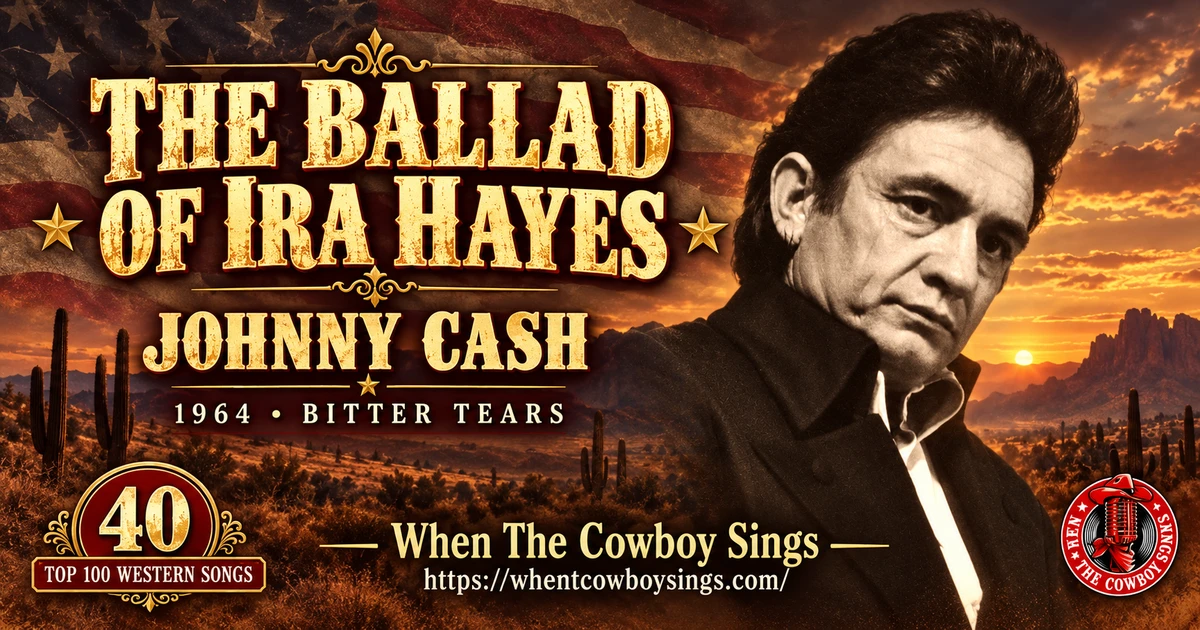
100 Greatest Western Songs of All Time ! Johnny Cash’s “The Ballad of Ira Hayes” asks us to remember the man beyond the famous photograph. 🇺🇸 A powerful 1964 recording about service, injustice, and a life that deserved better—No. 40 in Best Western. 🎸 🕊️ #whenthecowboysings #JohnnyCash #IraHayes #BestWestern #ClassicCountry

A photograph can turn a man into a national symbol without telling us what happens when he gets home. Johnny Cash – The Ballad of Ira Hayes follows that uncomfortable distance between public honor and private hardship. Released in 1964, it asks listeners to look beyond an image of wartime triumph and remember the person whose name is in the title.

Johnny Cash – The Ballad of Ira Hayes: writer and recording

Peter La Farge wrote the song. Cash’s version was produced by Don Law and Frank Jones and released by Columbia in 1964. Cash’s official discography dates the single to June 2, 1964, and credits La Farge as its songwriter.

The recording also appeared on Bitter Tears: Johnny Cash Sings Ballads of the American Indian, released on October 1, 1964. The album brought songs about Native American experiences into Cash’s catalog, placing this individual life within a broader set of stories about loss, injustice, and dignity.

Who was Ira Hayes?

Arlington National Cemetery identifies Hayes as a Pima (Akimel O’odham) Marine who grew up on Arizona’s Gila River Reservation. He enlisted in the Marine Corps Reserve in 1942 and served in the Pacific during World War II.

On February 23, 1945, Hayes was among the six Marines photographed by Joe Rosenthal raising the American flag on Mount Suribachi during the Battle of Iwo Jima. The image made him a famous, reluctant public figure. He later returned to the Gila River Reservation.

Hayes died on January 24, 1955, aged 32. Arlington describes the reported cause as alcohol poisoning and exposure. The song’s account of his death is part of its storytelling; it should be distinguished from the cemetery’s historical account.

What the song is asking us to hear

La Farge’s narrative connects Hayes’s service with the treatment of Native people at home. It moves from the land and livelihood of his community to war, public celebration, and the struggle that follows. The repeated return to his name keeps the focus on a human being who might otherwise be reduced to a familiar photograph.

To these ears, Cash’s measured delivery gives that structure its force. He leaves room for the story to settle, and the contrast between national gratitude and personal neglect becomes harder to ignore. The record works as a remembrance and a protest, asking what respect for a veteran means beyond ceremonies and applause.

A country hit from Bitter Tears

Cash’s 1964 recording reached No. 3 on Billboard’s country singles chart. It became a major song associated with Bitter Tears, an album that shows how readily his music could move between country storytelling and social commentary.
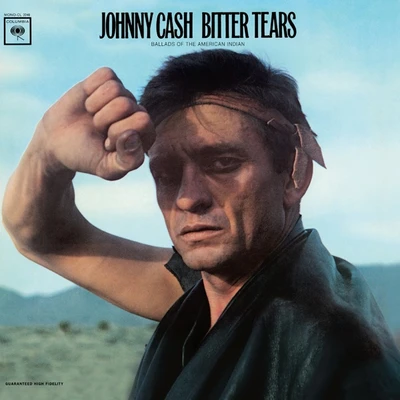
Johnny Cash – Bitter Tears: Ballads of the American Indian, 1964 album cover
Johnny Cash – Bitter Tears: Ballads of the American Indian (Columbia, 1964).

The album’s official track listing also includes “As Long as the Grass Shall Grow,” “The Talking Leaves,” and “The Vanishing Race.” Hearing the song in that setting gives its subject more room than a singles collection can.

No. 40 in Best Western

The Western Writers of America list reproduced by Dave’s Music Database places “Ballad of Ira Hayes” at No. 40. Its place in our Best Western collection reflects the range of that tradition: alongside cowboys and frontier adventures are songs that confront the history and people of the American West.

Listen to Johnny Cash – The Ballad of Ira Hayes

Listen below to the Columbia recording supplied on Cash’s official artist channel. Then explore more songs in Best Western.

Most Popular

LEAVE A REPLY

Please enter your comment!
Please enter your name here

Read Now

Charley Pride – Never Been So Loved (In All My Life)

Unveiling the Heartfelt Charm of Charley Pride's "Never Been So Loved (In All My Life)" In the vast landscape of Country Music, few songs resonate with the timeless emotion and authenticity as Charley Pride's "Never Been So Loved (In All My Life)." Let's embark on a journey to...

Carl Butler and Pearl – Loving Arms

Unveiling the Heartfelt Tale of Carl Butler and Pearl's "Loving Arms" Have you ever stumbled upon a melody that feels like a warm embrace from a bygone era? Carl Butler and Pearl's "Loving Arms" is precisely that—a timeless classic that beckons listeners into a world of tender affection...

Johnny Cash – What Is Truth?

“What Is Truth”, a song written and recorded by Johnny Cash for the Columbia label, was recorded on March 9, 1970, at Columbia Recording Studio B, 804 16th Ave. South, Nashville, TN. In the recording session Johnny Cash was accompanied by: Bob Wootton (guitar), Norman Blake (dobro),...

Cal Smith – Country Bumpkin

Cal Smith - Country Bumpkin: A Timeless Gem of Country Music Unlock the essence of true country with Cal Smith's iconic hit, "Country Bumpkin". Ever wondered about the story behind this classic tune that has resonated through generations? Let's dive in! The Story Behind the Song: Recorded in 1974, "Country...

Ernest Tubb – Your Cheatin’ Heart

Ernest Tubb - Your Cheatin’ Heart: The Story Behind the Song If you're a fan of country music, you've probably heard of Ernest Tubb. He was a legendary singer and songwriter who helped shape the genre in the mid-20th century. One of his most famous songs is "Your...

Ernest Tubb – Walking the Floor Over You

Unlocking the Melodic Tale of Ernest Tubb - Walking the Floor Over You If you've ever found yourself captivated by the timeless tunes of country music, Ernest Tubb's classic "Walking the Floor Over You" is undoubtedly a gem worth exploring. Picture this: the year was 1941, the songwriter...

Hank Williams – Jambalaya (On the Bayou)

Hank Williams - Jambalaya (On the Bayou), is a song written and recorded by American country music singer Hank Williams that was first released in July 1952. It is Williams' most covered song. Named for a Creole and Cajun dish, jambalaya, it spawned numerous cover versions and...

Hal Ketchum – Small Town Saturday Night

"Small Town Saturday Night" is a song written by Pat Alger and Hank DeVito, and recorded by American country music artist Hal Ketchum. It was released in April 1991 as the first single from his debut album Past the Point of Rescue. The song reached No. 2...

Hank Williams – Lovesick Blues

Hank Williams - Lovesick Blues: Exploring the Heart of Country Music Picture this: the year is 1949 and released on February 11, 1949, and a young Hank Williams steps up to the mic. As the notes of "Lovesick Blues" fill the air, hearts sway and souls stir. But...

Randy Travis – Diggin’ Up Bones

Unearthing the Story Behind Randy Travis - Diggin’ Up Bones Loop Opener: Unlocking the Mystery of "Diggin’ Up Bones" Imagine a dusty trail, a solitary figure with a guitar in hand, and the echo of a timeless melody. "Diggin’ Up Bones" by Randy Travis takes us on a poignant...

Carl Smith – There She Goes

Unlocking the Essence of Carl Smith's "There She Goes" in Country Music Lore If you're delving into the rich tapestry of country music history, Carl Smith's "There She Goes" is a gem that beckons exploration. Picture this: the year was 1955, a time when country music was evolving,...

Don Gibson – Blue Blue Day

Don Gibson - Blue Blue Day, is a song written and recorder by Don Gibson, went to number one for two weeks on the Country & Western Best Seller chart and remained on that chart for a total of six months. The song also was Don Gibson's...
ADVERTISEMENT

Keep Exploring